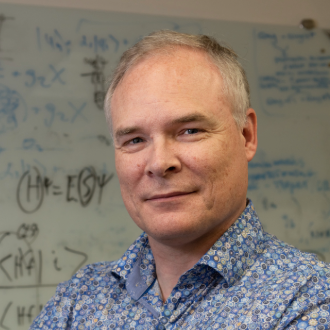
Bert de Jong
Director, Quantum Systems Accelerator
Senior Scientist
Lawrence Berkeley National Laboratory and Quantum Systems Accelerator
FROM QUBITS TO SYSTEMS
Quantum Computing Applications and Systems
JOIN US AT QCASThe next chapter of quantum computing
is a systems challenge.
QCAS brings together researchers, engineers, and industry leaders building the path from quantum experiments to scalable, fault-tolerant machines.
One day of ideas and conversations across quantum information,
design automation, computer architecture, and control.
Perspectives from academia,
national labs, and industry.
Director, Quantum Systems Accelerator
Senior Scientist
Lawrence Berkeley National Laboratory and Quantum Systems Accelerator
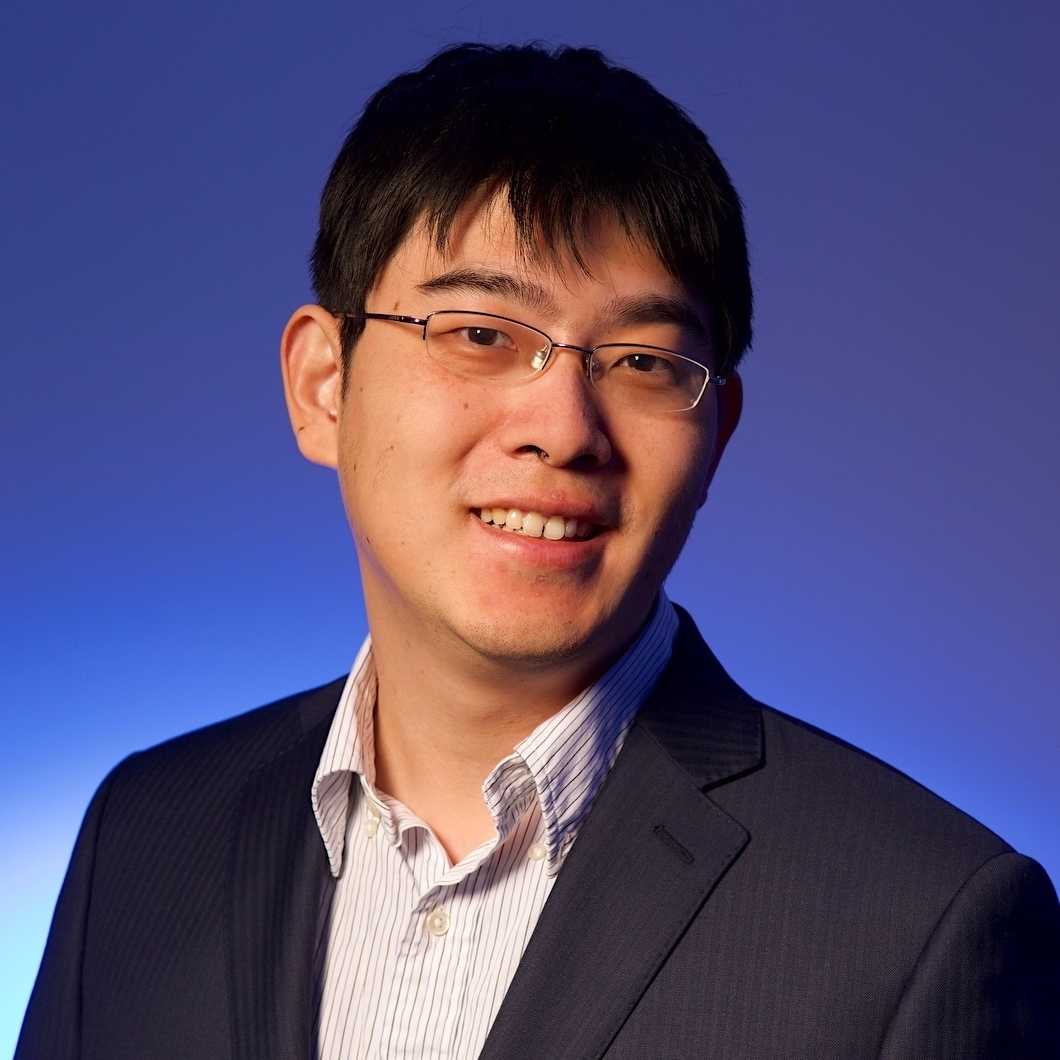
Associate Professor of Computer Science and UMIACS
QuICS Fellow
University of Maryland and QuICS
From physical qubits
to useful quantum systems.
Codes, decoders, syndrome processing, and real-time classical hardware.
Logical operations, gate synthesis, circuit optimization, and resource estimation.
Modular processors, quantum interconnects, and heterogeneous integration.
Platform-aware scheduling, pulse-level control, calibration, and AI-assisted optimization.
Two keynotes. Nine invited talks.
Posters, conversations, and a closing panel.
Talk titles, speaker assignments, room, and final session chairs will be announced.
| Time | Session | Remark |
|---|---|---|
| 08:30–08:50 | Coffee and Registration | |
| Morning Sessions | ||
| 08:50–09:00 | Opening Remarks | Organizers |
| 09:00–09:40 | Keynote 1 | 35 + 5 Q&A |
| 09:40–10:10 | Invited Talk 1 | 25 + 5 Q&A |
| 10:10–10:50 | Poster Session I & Coffee Break | Posters, coffee, and networking |
| 10:50–11:20 | Invited Talk 2 | 25 + 5 Q&A |
| 11:20–11:50 | Invited Talk 3 | 25 + 5 Q&A |
| 11:50–12:20 | Invited Talk 4 | 25 + 5 Q&A |
| 12:20–13:20 | Lunch | |
| Afternoon Sessions | ||
| 13:20–14:00 | Keynote 2 | 35 + 5 Q&A |
| 14:00–14:30 | Invited Talk 5 | 25 + 5 Q&A |
| 14:30–15:00 | Invited Talk 6 | 25 + 5 Q&A |
| 15:00–15:30 | Invited Talk 7 | 25 + 5 Q&A |
| 15:30–16:10 | Poster Session II & Coffee Break | Posters, coffee, and networking |
| 16:10–16:40 | Invited Talk 8 | 25 + 5 Q&A |
| 16:40–17:10 | Invited Talk 9 | 25 + 5 Q&A |
| 17:10–17:40 | Closing Panel | Resource Estimation as the Rosetta Stone of Quantum System Design |
| 17:40–17:50 | Closing Remarks | Organizers |
Share work in progress with the people building the quantum computing stack. Students, postdocs, and early-career researchers are especially encouraged to contribute.
SUBMIT A POSTERQCAS 2026 welcomes poster proposals across quantum computing, including applications, algorithms, theory, and topics within or beyond the workshop's four featured tracks. The poster track is especially intended for students, postdoctoral researchers, and early-career industry researchers seeking feedback on work in progress.
The extended proposal deadline is October 9, 2026 at 23:59 Anywhere on Earth (AoE). Submit through EasyChair. Each proposal must be a single PDF, double-columned in 9pt or 10pt font, between one and three pages, containing the poster title, the authors with contact information and a designated main contact, an abstract of 200 to 250 words, and a statement of relevance to QCAS 2026.
Each proposal will be reviewed by at least two members of the program committee for technical quality and relevance to the QCAS 2026 scope. Notification of acceptance will be sent by October 16, 2026, and accepted abstracts will be posted on this site.
The call was released on August 17, 2026 through the QCAS 2026 website, ICCAD conference channels, quantum computing community mailing lists, and direct outreach to research groups active in the workshop's topic areas. Open the EasyChair submission portal.
Double-column format using 9pt or 10pt font.
A descriptive title that will attract potential attendees.
List all authors, provide contact information for each, and clearly identify the main contact.
200–250 words. Upon acceptance, this abstract will be published on the QCAS 2026 website.
Explain how the work connects to quantum computing and quantum engineering, with reference to the QCAS 2026 tracks where relevant.
10:10–10:50
Coffee is served in the poster area to support continuous discussion and networking.
15:30–16:10
Coffee is served in the poster area to support continuous discussion and networking.
Organizers will assign accepted posters to the morning or afternoon session by topical affinity. Authors should not select a session when submitting.
Posters remain on display throughout the day. Each 40-minute poster session is combined with the coffee break so attendees can browse, discuss, and network over refreshments.
Posters must be 24 × 36 inches (ARCH D size) in landscape orientation. Presenters are responsible for printing their own posters; display boards and mounting materials will be provided by the workshop.
At least one author of each accepted poster is expected to register for ICCAD 2026 and present in person in San Jose. Workshop attendance follows the standard ICCAD registration process; QCAS does not set a separate registration deadline.
Early bird timing: The ICCAD 2026 early bird deadline is August 24, 2026—before poster acceptance notifications are sent. Authors seeking the early bird rate will need to register before learning their submission outcome.
Bringing disciplines together.
Moving quantum computing forward.
Rutgers University

Carnegie Mellon University
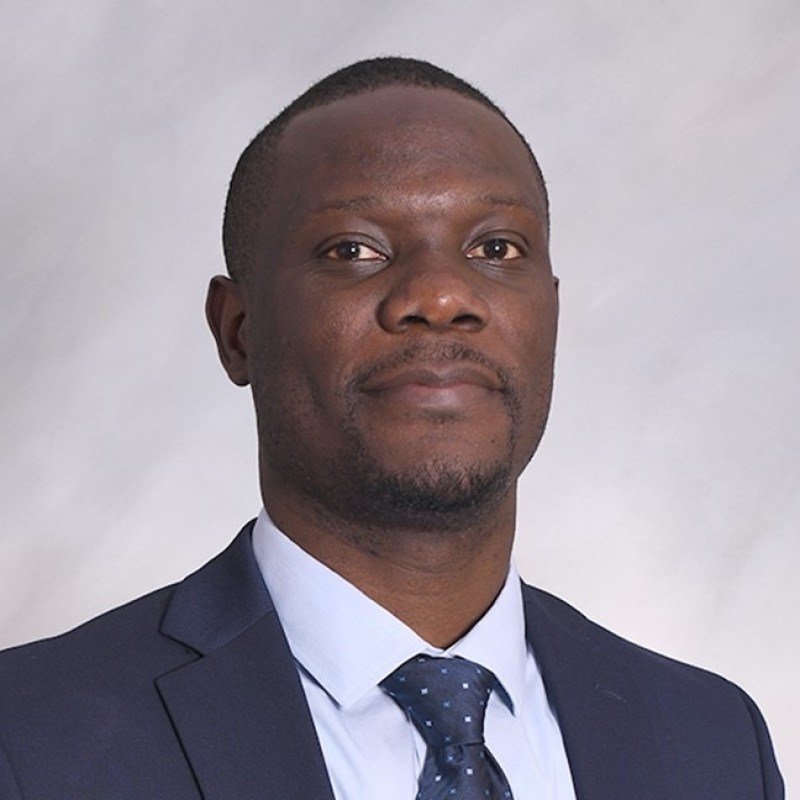
The Cincinnati Insurance Companies
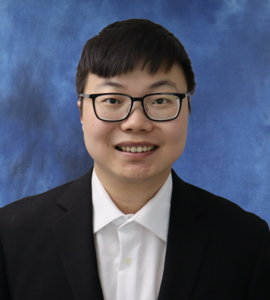
The Chinese University of Hong Kong
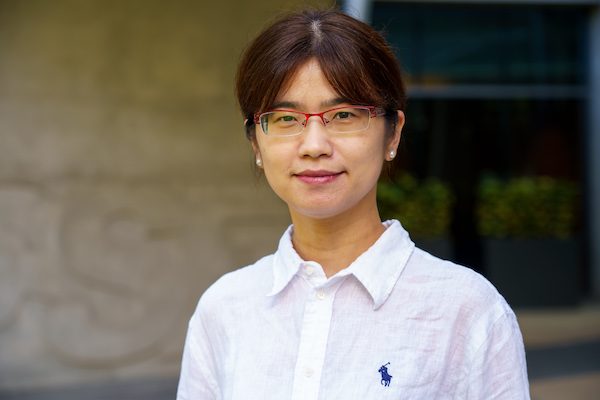
University of California, San Diego
Cadence Design Systems
JPMorganChase
Rutgers University
Shanghai AI Laboratory
University of Michigan
Yonsei University
Northwestern University
Stevens Institute of Technology
University of Maryland
Carnegie Mellon University
Stevens Institute of Technology
Quantum Ready
University of California, Los Angeles
University of Chicago
Kent State University
Rutgers University
Thank you to FinQ Tech for supporting QCAS 2026 and our quantum computing research community.
NOVEMBER 12, 2026
San Jose Marriott
Co-located with IEEE/ACM ICCAD 2026.
301 S Market Street, San Jose, CA